
Tested twice before it is sold once.
Purity by HPLC. Identity by mass spectrometry. Independent lab, every lot, results public. This page explains what each of those words means and where the numbers on a certificate come from.
Six steps, no shortcuts
- 01
Synthesis
Solid-phase peptide synthesis by a US contract manufacturer, followed by cleavage, preparative HPLC purification and lyophilization into sealed glass vials under nitrogen.
- 02
Sampling
Random vials from every production lot are pulled and sent to an independent analytical laboratory. We do not test our own product and call it independent.
- 03
HPLC purity
Reverse-phase HPLC separates the target peptide from truncated, deleted or oxidized sequences. Purity is the area of the main peak as a percentage of all peaks. Release specification: ≥ 99.0%.
- 04
Mass-spec identity
LC-MS confirms the observed molecular mass matches the theoretical mass of the sequence. Right mass, right peptide. This is the check that catches a mislabeled vial.
- 05
Release or reject
A lot that meets specification is assigned certificate numbers and released. A lot that does not is destroyed. There is no discount bin.
- 06
Publish
The certificate is published to the lab reports page and printed on every vial. Anyone can look it up, forever.

A chromatogram is not a marketing asset. It is the product.
What the numbers mean
Purity 99.4% (HPLC) — of everything the detector saw, 99.4% of the signal was the target peptide. The remaining 0.6% is typically water, counter-ions from purification, and trace deletion sequences.
Identity: conforms (LC-MS) — the observed mass matched the theoretical mass within instrument tolerance. This confirms the vial contains the peptide on the label.
Test date / expiration — the day the lab ran the sample, and the end of the validated storage window for a sealed vial at −20 °C.
Every certificate is searchable on the lab reports page and verifiable by number on verify.
- HPLC
- High-performance liquid chromatography. Separates components of a sample by how they interact with a column; used here to measure purity.
- LC-MS
- Liquid chromatography paired with mass spectrometry. Measures the mass of what elutes; used here to confirm identity.
- Area-%
- Purity expressed as the main peak's area divided by total peak area on the chromatogram.
- Lyophilized
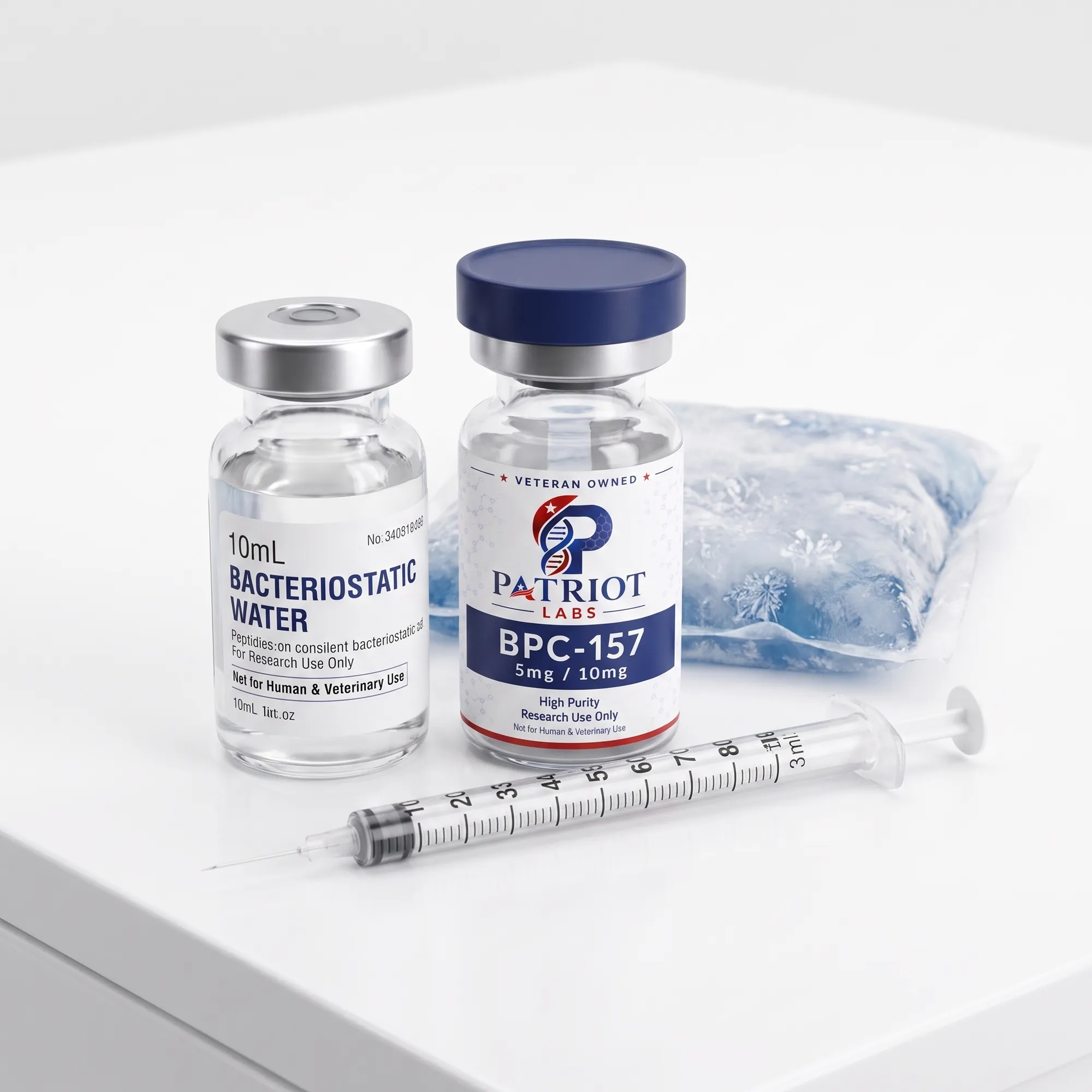
- Freeze-dried. The peptide is a stable powder until reconstituted with a diluent such as bacteriostatic water.
- Lot
- One production batch. Every vial in a lot shares the same certificate.
- COA
- Certificate of analysis. The lab's report for a lot: purity, identity, method, date.
Keep it cold, keep it dark
Sealed lyophilized vials: −20 °C, protected from light. Reconstituted with bacteriostatic water: 2–8 °C, used within 30 days, never refrozen. These are laboratory storage conditions, not use instructions.
New lots, new COAs, no spam.
One email when a new batch clears testing or a compound restocks. Unsubscribe in one click.
All products are sold for in-vitro laboratory research only and are not for human or animal consumption. Purchasers must be 21+ and qualified researchers. Nothing on this site is medical advice. See the research disclaimer.